Why OEM Garden Machinery is the Practical Choice for High-Volume Distribution
The Reality of the Mid-Range Market: Balancing Performance and Price
In the landscaping machinery business, the "best" machine isn't always the most expensive one on the shelf. For wholesalers and retailers serving professional contractors and residential users, the sweet spot lies in equipment that works hard without a premium price tag.
When you are moving hundreds of units a month, your customers aren't looking for a luxury brand; they are looking for a tool that starts on the second pull and finishes the job. This is where high-value OEM manufacturing fills the gap, providing machines that handle 90% of professional tasks at a fraction of the cost of high-end brands.
Brush Cutters: Power Delivery and Engine Efficiency
When selecting a wholesale brush cutter lineup, the engine choice defines your customer base. While some prefer the torque of a 2-stroke engine for its simplicity and power-to-weight ratio, others move toward 4-stroke models for lower emissions and easier fuel management.
Engine Reliability in High-Use Cycles
For mid-range 2-stroke models, the focus should be on the carburetor and ignition system. A well-tuned carburetor ensures the machine doesn't bog down in thick brush. From a distribution standpoint, you want engines that use standard fuel-to-oil ratios, making it easier for the end-user to maintain without specialized knowledge.
The Drive System and Vibration Control
A common failure point in cheaper machines is the drive shaft. We focus on solid steel internal shafts rather than flexible cables for our heavy-duty models. This ensures better power transfer to the cutting head. Additionally, a robust anti-vibration mount between the engine and the handle is non-negotiable. If a contractor’s hands are numb after an hour of work, they won't buy that model from you again.
Chainsaws: Matching Power to Bar Length
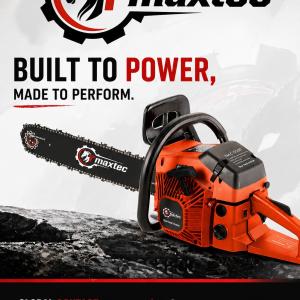
The most common mistake in the OEM chainsaw market is over-propping—putting a 20-inch bar on a 45cc engine. This strains the motor and leads to premature failure.
Smart Power Configuration
For high-volume retail, we recommend the following configurations to ensure longevity:
-
45cc - 52cc Engines: Best paired with a 16" or 18" bar. This provides the best chain speed and prevents the engine from overheating during deep cuts.
-
Easy-Start Systems: Modern pull-starters with a dual-spring mechanism reduce the effort needed by nearly 40%. This is a massive selling point for residential users and older pros alike.
Air Filtration and Heat Management
Dust is the enemy of any chainsaw. Using a standard, washable air filter system allows the user to keep the machine breathing in dusty environments without needing expensive proprietary replacements. Simple, effective cooling fin designs on the flywheel also help dissipate heat, which is vital when these machines are running for hours in summer conditions.
Why Compatibility and Maintenance Drive Your Profit
As a distributor, your biggest headache is often parts. This is where the advantage of our OEM philosophy shines. We prioritize component compatibility. By using standardized sizes for spark plugs, fuel filters, and drive sprockets, we ensure that your customers can find common wear parts at any local hardware store.
Low Failure Rates = High Margin
In the mid-to-low-end market, your profit is often eaten up by returns. By focusing on "tried and tested" engine designs rather than experimental tech, we keep the failure rate significantly lower. These machines are designed for the "基礎作業" (basic heavy-duty work)—clearing brush, felling small trees, and maintaining large properties day in and day out.
Building a Sustainable Supply Chain
Choosing an OEM partner is about more than just the lowest price per unit. It’s about finding a manufacturer that understands the balance between cost-cutting and essential quality. We focus on where it matters: the piston rings, the cylinder coating, and the drive gears. We save costs on flashy branding and unnecessary "smart" features that only break in the field.
For wholesalers looking to capture the "value-for-money" segment, the goal is simple: provide a machine that pays for itself in the first week of work.